
How to cover a town council meeting in an hour instead of three
Use the agenda to plan the coverage, record only the debates and votes that matter, then turn one meeting into several short, verified articles.

- The one-hour target covers drafting after the meeting, not the meeting itself.
- Read the agenda and attachments early to identify the decisions worth covering.
- Record short clips around marked agenda items instead of the full meeting.
- Write one short article per decision and verify every vote before publishing.
The publisher sits through a council meeting that runs close to three hours, notebook filling with quotes, motions and numbers, knowing the write up will eat the rest of the week. A repeatable capture and split process cuts the write up itself to about an hour of work. That hour measures the time spent drafting after the meeting, not the length of the meeting. The trick is deciding before the meeting what is worth recording, and after the meeting how many separate stories the night actually produced.
Most of the wasted time in council coverage comes from transcribing everything and then hunting through the transcript for the news. The structure is usually visible before the meeting starts. The agenda lists the items and the supporting documents carry the figures that will be discussed. What those documents cannot supply is what happened on the night: the debate, the disagreement and the final votes. That is the part a reporter has to capture live, then verify against a reliable current record before publishing.
What it is and who it is for
This is a working method for covering a regular public meeting with one person instead of a staff. It suits a solo publisher or a small newsroom that already attends council meetings and wants the coverage to stop consuming the week. It is less suited to an investigative story, where the value comes from weeks of records requests, or to a meeting where a single vote is genuinely the whole story and one article serves it better.
Before the meeting: work from the agenda
Get the agenda a day or two ahead, which most councils post publicly before each meeting. Read it once and mark three kinds of items: decisions that would change something residents notice, items with public comment or disagreement brewing, and consent items that pass in a block and are not worth individual coverage. Each marked decision is a potential short article. A long agenda that looks like one story is usually five or six.
The attachments show what is proposed, which frames the story, but a proposal in an attachment is not a result. The final vote is what makes the news, and that only exists after the meeting.
- 01Pull the agenda early
Download it as soon as the council posts it and read it in one pass.
- 02Mark the decisions
Flag every item that would change fees, rules, land use or spending, since each is a story.
- 03Skim the attachments
Budgets, maps and staff reports carry the proposed figures, so you know what is at stake.
- 04Treat proposals as proposals
Note the attachment figures as what staff asked for, not what the council decided.
- 05Write your question list
One question per marked item keeps you focused on the answer, not the whole room.
During the meeting: record selectively
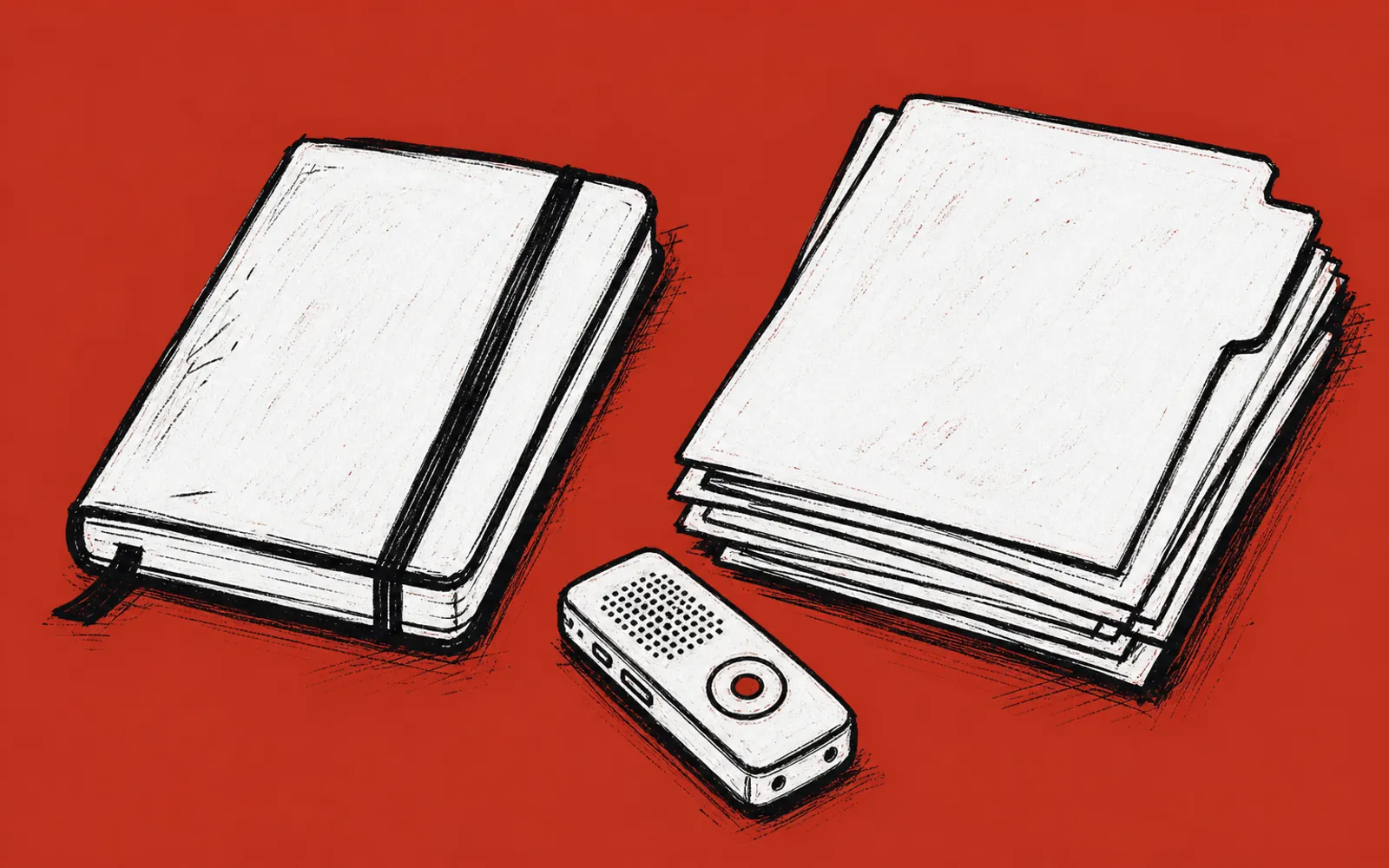
Do not record the full meeting. Start your recorder or voice memo app only when a marked item comes up, and stop it after the vote is announced. Capture the exchange between council members on the contested items, any comment from residents in the room, and the vote as the clerk reads it back. The goal is a handful of short clips, each tied to one agenda item, not one three hour file you will never want to open. Write the tally in your notebook as well, because a spoken vote in a clip is faster to check than to find.
- 01Start the clip at the item
Hit record when the chair reads your marked item, not at the call to order.
- 02Catch the disagreement
The debate is the part no agenda or minutes will preserve in the speakers' own words.
- 03Record the vote
Keep the recorder running through the roll call so the tally is on file.
- 04Note the outcome
Write the tally and any amendment in your notebook as a backup to the clip.
- 05Log each clip
One line per clip, agenda item number plus who spoke, makes the split obvious later.
After the meeting: split the night into short items
The write up goes faster when it is not one article. Each marked decision gets its own short item: what was proposed, what changed in the room, how the vote went and when it takes effect. The agenda gave you the structure, the attachments gave you the proposed figures, and the clips give you the quotes and the tallies, so each item is assembled rather than composed. This is the part that takes about an hour. Anything you cannot support from those materials, such as a figure amended mid-meeting that you did not catch, gets checked before it is printed, not guessed.
- 01Turn each clip into notes
Play each short clip once and write the quote, the tally and the effective date.
- 02Separate proposals from results
Label attachment figures as proposed and clip or notebook figures as decided.
- 03Verify before publishing
Check each tally against a reliable current record, such as the clerk's results sheet or the council's own recording of the same night.
- 04Write one short item per decision
A few hundred words per item is enough when the structure is already on paper.
- 05Group the leftovers
Consent items and postponements go into a single roundup, not separate stories.
- 06Schedule across the week
Spread the items so one meeting covers several days of publishing.
Handling meetings with no reporter present
When nobody can attend, the agenda and attachments still carry the proposals, but not the outcome. Approved minutes are adopted with a lag, usually at the following meeting, so coverage built on minutes alone runs late and reports decisions after the fact. If the council streams or records its meetings, that recording is a reliable current record of the debate and the votes, and it can supply the coverage the same way a personal clip would. If there is no stream and no reporter, the honest approach is to wait for a current record of the result rather than publish an outcome you cannot verify.
Where a content engine fits
The step where the method usually breaks down is turning clips and notes into clean articles on deadline. mainstreet gravity includes a content engine built for this part: it turns voice memos and public records into articles, so a publisher can record the debate, drop in the memo and get a draft to edit rather than a blank page. Members keep their own brand and use weekly group office hours to tighten the process.
Questions people ask
What does the one hour actually cover?
Can I use the attachments as the final numbers?
Do I need special tools?
How do I cover a meeting I cannot attend?
Why several short items instead of one long story?

TJ has launched 20+ local media brands with 175k+ subscribers and built the system mainstreet gravity members run on.